
Antennas and Lights Atop Willis Tower: Powering Chicago From Above
The antennas on Willis Tower, formerly known as the Sears Tower, in Chicago have played a significant role in both telecommunications and the building’s iconic stature. Rising above the city, these antennas help power Chicago’s broadcast, wireless, and digital infrastructure while contributing to the tower’s unmistakable skyline presence. From Skydeck Chicago on the 103rd floor, visitors can experience this engineering legacy firsthand while taking in views from one of the most recognizable buildings in the world.
Early History of Antennas on Willis Tower
- Construction and Early Installations (1970s): Willis Tower, completed in 1973, originally had antennas installed for various communications and broadcasting purposes. At the time, it was the tallest building in the world, and the height made it a prime location for antennas.
- Radio and Television Broadcasting: Initially, the building hosted broadcast antennas for radio and television stations. This helped extend the range and improve the quality of radio and TV signals in the Chicago metropolitan area and beyond, especially because the tower’s height allowed signals to travel farther.
The Rise of Cellular and Other Technologies
- Diversity of Signals: Over time, a variety of technologies, including microwave, radio, and television, were handled by the antennas at the tower. These antennas supported everything from emergency communications to air traffic control signals and corporate networks.
Structural and Design Aspects
- Innovative Engineering: The antennas are integrated into the structure of the building. They consist of two masts extending above the roofline. Some of these antennas are mounted on the building’s spire. The antennas were designed to withstand harsh weather conditions, including high winds, storms, and winter icing common in the Chicago area.
- Tallest Building in the U.S. (at one point): Willis Tower was the tallest building in the U.S. even without its antennas. The building itself, without the antennas, stands at 1,454 feet to the roof, which made it the tallest building in the U.S. when it was completed in 1973. The additional height of the antennas, which bring the total height to 1,730 feet, was primarily for telecommunications purposes, but it was the building’s core structure that made it the tallest at the time. It held the title of the tallest building in the U.S. for 25 years, until it was surpassed by One World Trade Center in New York City in 2013. One World Trade Center’s total height, including its spire, reaches 1,776 feet, making it the tallest building in the U.S. today.
Modern Role and Updates
1990 to Present
- Telecommunications Hub: Today, the antennas on Willis Tower continue to serve a wide range of purposes. They remain vital to the city’s communications infrastructure, supporting television and radio broadcasts and other data transmission services.
- Digital and Wireless Technology: The antennas play a critical role in telecommunications and broadcasting across Chicago. The tower hosts antennas for cellular networks, supporting mobile service providers like AT&T, Verizon, and T-Mobile, enabling coverage for 4G and 5G technologies. Additionally, the antennas are used for digital TV and FM radio broadcasts, providing signals for local stations. The tower also supports fiber-optic networks, offering high-speed internet and data transmission for businesses and telecommunications companies. The antennas facilitate both public and private networks, strengthening wireless communication in the region. Overall, the Willis Tower’s antennas are essential to Chicago’s digital infrastructure, ensuring efficient mobile, broadcast, and internet communications.
In Popular Culture
- While antennas are not the focal point of the Willis Tower’s identity, they add to its unique appearance. The antennas give the tower a distinctive silhouette, making it instantly recognizable in the Chicago skyline.
Lighting
The lighting of Willis Tower has long been a signature feature of the Chicago skyline, drawing attention to the building’s impressive height and iconic architecture. Over the years, the lighting system has undergone significant changes, evolving from a manual process to a more advanced, efficient system.
- Original Lighting (1973 to Early 2000s): When the Sears Tower opened in 1973, it featured a lighting system primarily focused on the tower’s distinctive spires. This lighting was basic and aimed at making the structure visible at night from a distance. The lighting system was manually operated. A two-person crew was required to climb to the 109th and 110th floors of the tower and swap color pallets, commonly called gels, over each individual floodlight by hand. This process could take up to four hours.
- Changing the Name to Willis Tower (2009): After the tower was sold and renamed Willis Tower in 2009, there was renewed interest in updating the building’s lighting system to reflect its new identity. The building’s new owners sought to make the lighting more dynamic and visually striking.
- LED Lighting (2010s): In 2013, a significant upgrade to the lighting system was introduced. Willis Tower adopted a dynamic LED lighting system that allows different color schemes and effects to be displayed on the tower. This upgraded array, which takes only seconds to change colors, allowed for more energy-efficient lighting while still offering striking visual displays.
- Special Occasions and Holidays: The tower’s lighting has become an iconic feature of the Chicago skyline for special occasions and social causes. For holidays, the tower is lit in themed colors such as red, white, and blue for Independence Day or green for St. Patrick’s Day. It also celebrates sports championships and charity events. In addition, the lighting system is used to raise awareness for causes such as health initiatives, environmental issues, and social movements, allowing the city to show support for both local and global efforts.
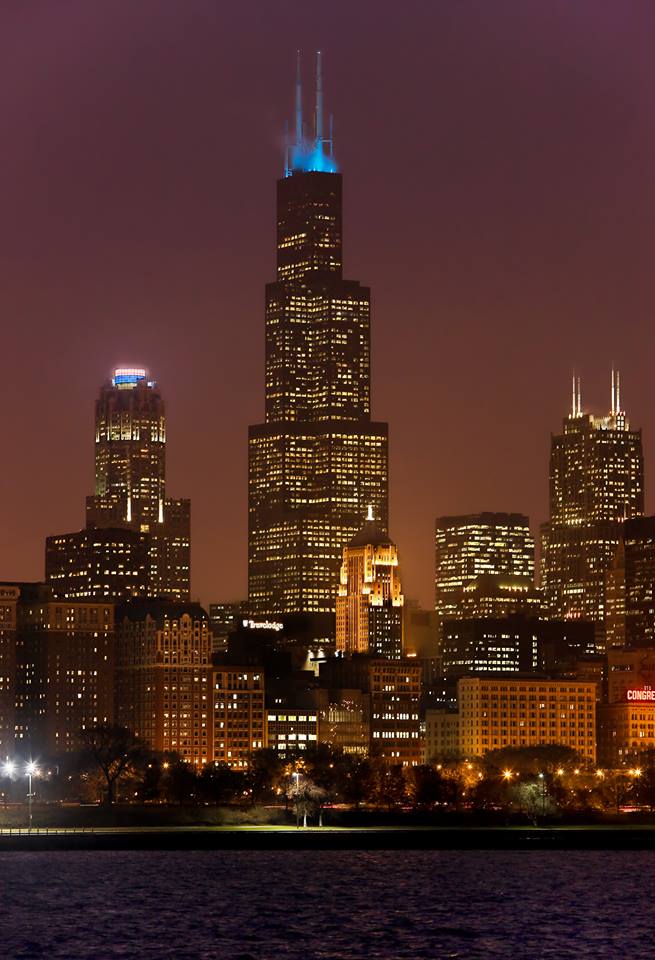
The lighting of Willis Tower has become an important part of Chicago’s nighttime identity and continues to evolve with new technological advances and cultural events.
What Color Will the Willis Tower Lights Be Tonight?
The color of the Willis Tower antenna lights changes regularly to recognize holidays, major city events, sports milestones, and important social or charitable causes. Each lighting display is intentional and designed to reflect what Chicago is celebrating or supporting on a given day.
To see the current lighting color and learn why the tower is illuminated that way, check out Skydeck Chicago’s official events and lighting calendar. The page is updated regularly and provides context behind each lighting decision, from seasonal celebrations to community initiatives.
Checking the lighting schedule is a great way to connect your Skydeck visit to what is happening in Chicago that day and experience the tower as part of the city’s ongoing story.
Experience Willis Tower From Skydeck Chicago
Today, the antennas and lighting systems of Willis Tower continue to shape both Chicago’s infrastructure and its visual identity. From supporting modern telecommunications to illuminating the skyline for major events and causes, these elements reinforce the tower’s role as a symbol of innovation and connectivity.
To fully appreciate this history and its impact, visit Skydeck Chicago and experience Willis Tower from above. Step out onto The Ledge, take in panoramic city views, and see how one of the world’s most iconic skyscrapers continues to power and inspire Chicago. Plan your visit to Skydeck Chicago today.
Frequently Asked Questions
What are the antennas on Willis Tower used for?
The antennas on Willis Tower support television and radio broadcasting, cellular networks, emergency communications, and data transmission across Chicago and the surrounding region.
How tall is Willis Tower with its antennas?
With its antennas, Willis Tower reaches a total height of approximately 1,730 feet, making it one of the tallest structures in the United States.
Why does Willis Tower light up in different colors?
Willis Tower uses a dynamic LED lighting system to display themed colors for holidays, major events, sports championships, and social or charitable causes.
What is Skydeck Chicago?
Skydeck Chicago is the observation deck located on the 103rd floor of Willis Tower. It offers panoramic views of the city and features The Ledge, a glass-floored balcony extending out from the building.